Volumetric Weight Explained: How Courier Companies Calculate Shipping Charges
One of the most common billing surprises for new e-commerce sellers is discovering that a lightweight package was charged as if it weighed several kilograms more. The reason: volumetric weight.
The Formula
Couriers charge based on whichever is greater — the actual physical weight or the calculated volumetric weight. The divisor (usually 5000 for domestic, sometimes 4000–6000 depending on the courier) reflects how much space a shipment occupies relative to its weight.
A Practical Example
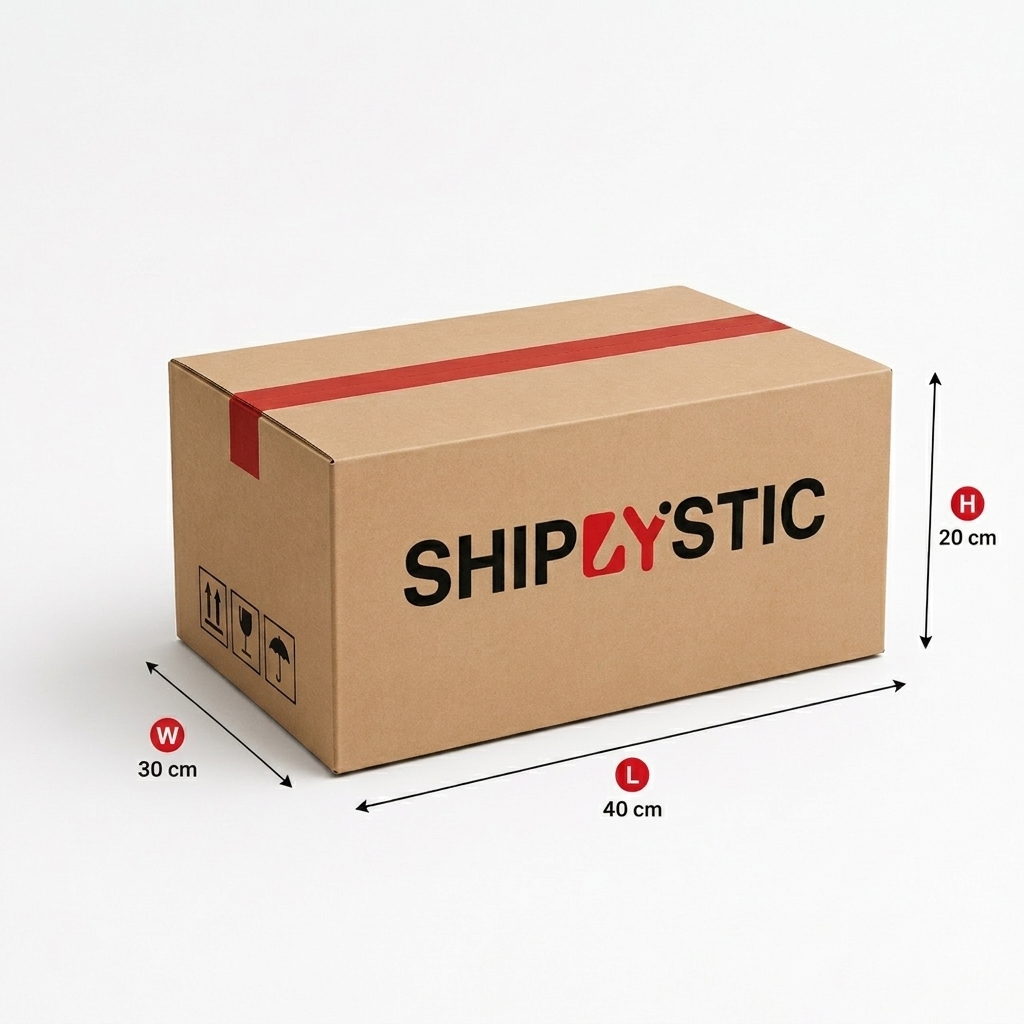
Consider a box measuring 40cm × 30cm × 20cm with an actual weight of 1kg. The volumetric weight is (40 × 30 × 20) ÷ 5000 = 4.8kg. Even though the parcel physically weighs just 1kg, the courier will bill it as 4.8kg — nearly five times higher.
Why This Matters Most For Certain Categories
- Apparel: Loosely packed clothing takes up more box volume than its weight suggests
- Cosmetics and Beauty: Small items often shipped in oversized boxes with excess void fill
- Electronics: Protective packaging can significantly inflate dimensions
- Home Décor: Naturally bulky, low-density items are the most exposed to volumetric charges
How to Minimise Volumetric Weight Charges
- Choose the smallest box that safely fits the product
- Avoid excess void-fill material; use appropriately sized cushioning instead
- Use flat or slim packaging for apparel wherever possible
- Regularly audit your top SKUs' actual vs volumetric weight and generate standardized labels with our Free Shipping Label Maker
For high-volume sellers, even a small reduction in package dimensions per shipment compounds into significant savings across thousands of orders per month.
Why Shiplystic
Shiplystic's rate calculator shows both actual and volumetric weight upfront for every shipment, and our carrier-selection engine factors in the true billable weight — not just the sticker rate — when choosing the most cost-effective courier.